
Influencer Marketing Agency vs Platform: Which Is Better for Brands in 2026?
Agencies made influencer marketing easier, but brands now want more control and transparency. Here's how an influencer marketing agency and a platform compare in 2026.
- Published
- 6 min read
Let's say you are a brand manager who has been working in influencer marketing since 2022.
You have seen it booming. You have also seen it getting strained. But if you have ever stopped and thought about what you are actually getting from it, this one is for you.
India's influencer marketing sector is projected to reach ₹4,500 crore to ₹5,000 crore by 2027. And the cost of brands choosing the wrong platform for influencer marketing could be huge.
At first, 5-6 years ago, you got to know creators through hashtags, a friend's recommendation, a random post, or a viral video. You would text them about a campaign, wait for a few days, and sometimes get a reply. Other times, you wouldn't. If things worked out, you launched a campaign.
Working with 2-3 creators was easy.
But once you had 10 creators in your hands, things started going over your head. Endless calls, messages, spreadsheets, timelines, and constant follow-ups. Everything was messy. You were reaching out to creators, chasing them continuously, and handling everything by yourself.
Remember How Influencer Marketing Used to Work?
Back then, influencer campaign management was completely manual.
You found creators yourself.
You negotiated prices yourself.
You followed up for content yourself. And you tracked everything through spreadsheets. The work was manageable when campaigns were small. But as creator marketing started growing, so did the complexity.
Why Influencer Marketing Agencies Became Essential
Once influencer marketing agencies entered the picture, things became easier.
You finally had something off your back. You no longer had to chase creators all day. Agencies did a ton of the work for you. Working with agencies became fun.
Campaign reports came to you regularly. Ideas flowed in. Execution became smoother. Everything started feeling easier.
For many brands, influencer marketing agencies solved a very real problem.

Why Brands Are Questioning Influencer Marketing Agencies in 2026
Then, a few years later, things started feeling off.
You started seeing the same creators again and again.
You didn't fully understand how their pricing worked.
You could see the reports. You could see the big numbers: views, likes, shares, and reach.
But one question remained the same:
"Did we actually get any customers?"
Now it's 2026, and the questions are becoming harder to ignore.
- Why are you working with certain creators?
- Is it because they genuinely fit your brand?
- Or because they are part of the agency's network?
- Where does your money actually go?
- How much is being spent on creators, and how much is going elsewhere?
And there are many more questions like these.
That is exactly why brands are questioning every decision more than ever before signing anything.
Are Influencer Marketing Agencies Actually Dying?
I wouldn't say they are dying.
But more than half of what agencies used to do manually is now being done by AI.
AI is becoming very good at handling labour-intensive tasks.
The question is not whether agencies are disappearing.
The question is whether brands still need to pay for every process that can now be automated.
What Does an Influencer Marketing Agency Actually Do?
Typically, an influencer marketing agency:
- Searches for and shortlists creators who suit your brand.
- Checks for fake followers and poor-quality audiences.
- Discusses rates and deliverables with creators.
- Explains what the content should look like.
- Schedules posts and manages payments.
- Tracks engagement and prepares reports.
There is real value in these services.
However, there are still some gaps that brands are increasingly paying attention to.
Repeated Creators
Many brands are shown the same creators repeatedly, limiting fresh opportunities and new audience exposure.
Limited Pricing Transparency
Campaign pricing usually includes creator payments, agency fees, and operational costs. But brands often cannot clearly see what is going where.
Budget Growth Doesn't Always Mean Better Performance
Agency revenue generally grows as brand budgets grow, whether or not the campaign performs well.
That doesn't necessarily mean agencies are bad.
It simply means brands deserve more visibility into how their money is being spent.
Small Brands Are Often Left Out
Many small brands cannot afford to work with agencies due to higher costs. Some also lack the knowledge to understand how agency processes work.
Delayed Visibility
A campaign often moves through multiple people before reaching the final report stage.
As a result, brands usually learn what happened after the campaign is over, rather than understanding what is happening while the campaign is running.
What Is an Influencer Marketing Platform?
An influencer marketing platform is software that allows brands to discover creators, run campaigns, and track results from one place.
You stay in control, while the tools do the heavy lifting.
Here's what that looks like in practice.
You Know Where Your Money Is Going
No hidden layers.
More clarity.
More transparency.
You Understand the Entire Process
Every stage of the campaign is visible, from creator selection to campaign performance.
300+ Creator Attributes
Instead of relying on a limited creator network, you can evaluate creators using hundreds of data points.
Everything in One Workflow
Discovery, communication, approvals, payments, and reporting all happen in one place.
Better Campaign Measurement
You don't have to rely only on views and likes.
You can understand how the campaign is actually performing against your goals and improve influencer marketing ROI.
Lower Risk
You can start small, test what works, and scale gradually.
Influencer Marketing Agency vs Platform: A Quick Comparison
| Factor | Influencer Marketing Agency | Influencer Marketing Platform |
|---|---|---|
| Creator Discovery | Usually limited to agency networks | Access to a broader creator database |
| Pricing Visibility | Often bundled into campaign pricing | Transparent creator and campaign costs |
| Campaign Control | Agency-led | Brand-led |
| Reporting | Usually shared after campaigns | Real-time visibility |
| Campaign Management | Handled by agency teams | Managed through software workflows |
| Budget Flexibility | Often higher minimum spends | Easier to start with smaller budgets |
| Transparency | Limited visibility into processes | Greater visibility at every stage |
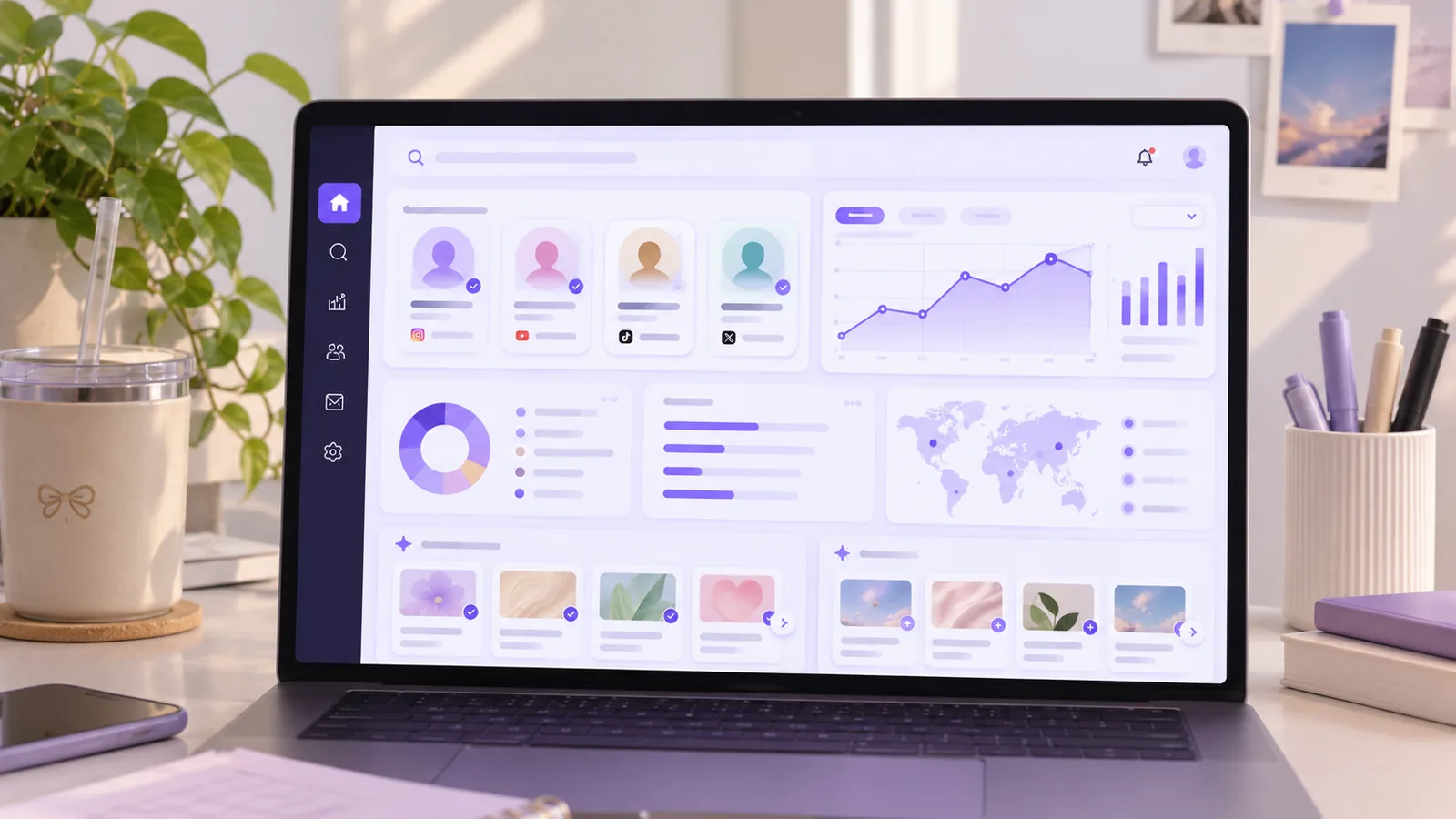
How Katalisia Approaches Influencer Marketing Differently
This is exactly the gap that an influencer marketing platform like Katalisia is trying to solve.
Katalisia matches creators to each campaign using deeper attributes, audience signals, and predicted performance.
The shortlist is built around your goals, not around who is already on a list.
Instead of relying only on network-based recommendations, creators are evaluated using:
- 300+ creator attributes
- Audience signals
- Performance indicators
- Category relevance
- Campaign fit
If you want to know what good creator selection looks like, it starts with matching creators to the audience and outcome you're trying to achieve.
Which Is Better: An Influencer Marketing Agency or Platform?
Agencies definitely have their advantages.
They make your day-to-day work easier and handle a large portion of the workload.
But if you want control and transparency, an influencer marketing platform can be a better choice.
You can see how creators are selected.
You can choose creators based on your niche and campaign requirements.
You can monitor how your campaign is performing while it is running.
You can understand where your budget is going.
You can also start with a smaller budget, learn what works, and scale from there.
The decision is not necessarily agency versus platform.
It is about choosing the approach that gives your brand the visibility, flexibility, and confidence it needs.
The Future of Influencer Marketing
This is the idea behind Katalisia:
Creator marketing should work like a measurable marketing channel, not a guessing game.
Creators should be matched based on audience fit and predicted performance.
Pricing should be transparent.
Campaigns should be measurable.

And brands should be able to start without committing huge budgets upfront.
With Katalisia, brands can begin with pilot campaigns starting from ₹10,000 and work with creators who fit their goals through a transparent and data-driven process.
The agency era helped brands get started with influencer marketing.
The influencer marketing platform era is helping brands do it with greater transparency, better campaign measurement, and more control over every rupee spent.
That's the idea behind Katalisia.
Ready to See Where Every Rupee Goes?
Run a pilot creator campaign with Katalisia from ₹10,000 and get matched with creators based on audience fit, predicted performance, and your campaign goals.
Start a Pilot CampaignMarketing Executive at Katalisia.